Java
Java Programming: Building Strong Foundations
Java is one of the most popular programming languages in the world and a strong choice for students who want to build rigorous computer science foundations — particularly those aiming for competitive exams or technology careers.
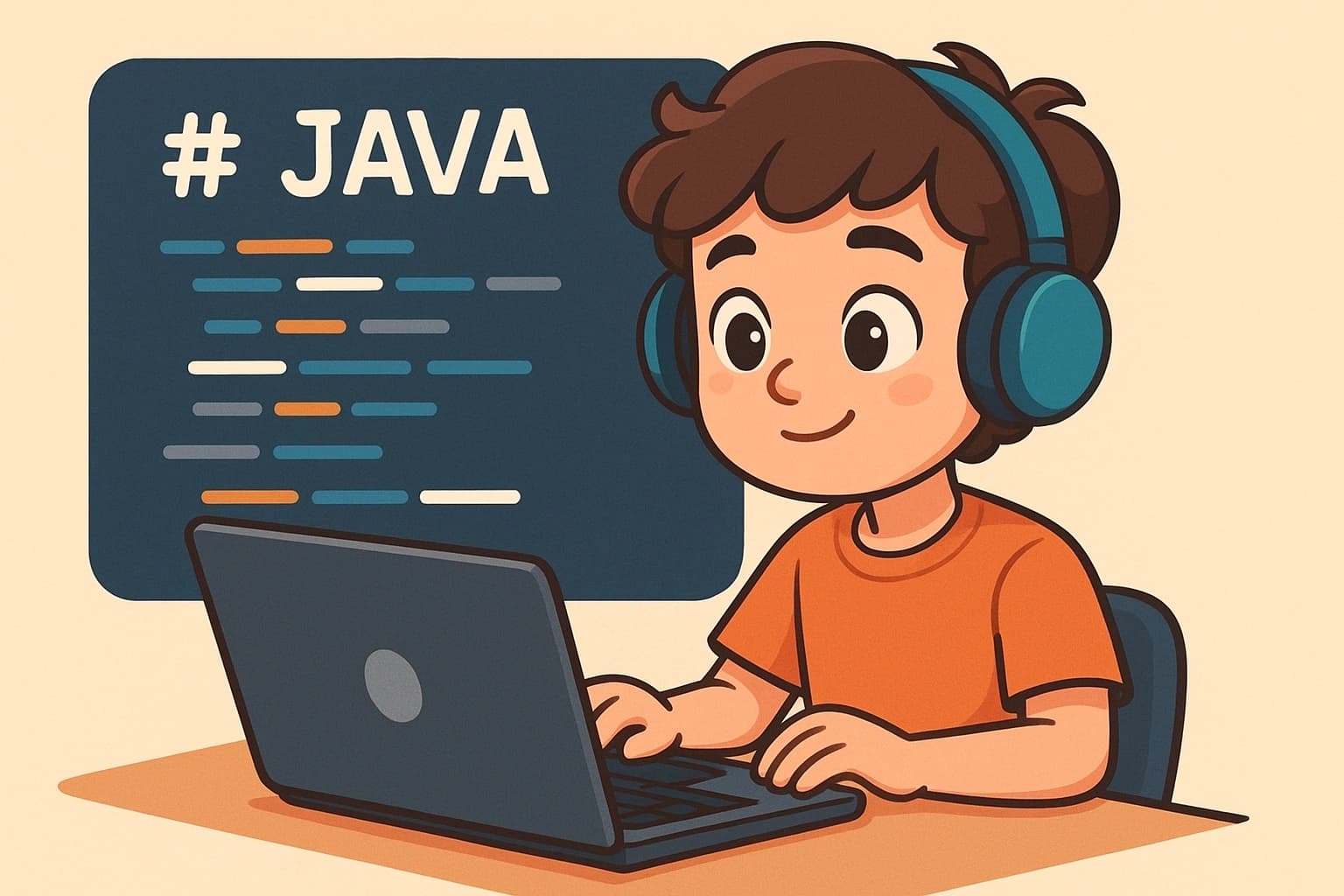
Java is one of the most popular programming languages in the world and a strong choice for students who want to build rigorous computer science foundations — particularly those aiming for competitive exams or technology careers.
Java has been one of the world's most widely used programming languages for over 25 years. Android apps, banking systems, enterprise software, and computer science university curricula all rely on Java. For students who want to build serious programming foundations — especially those with an eye on competitive exams or technology careers — Java is a powerful choice.
What Makes Java Different
Java is an object-oriented programming language. This means it organises code around objects — self-contained units that combine data and behaviour. Learning to think in objects is a significant mental shift from procedural languages like Python, but it is one of the most important skills in professional software development.
Once a student understands object-oriented programming in Java, they can transfer that thinking to C++, C#, Python classes, and most modern languages. It is a foundation that multiplies every other skill.
Who is Java For?
- Students preparing for school computer science boards and competitive exams
- Teenagers aiming for engineering or computer science at university
- Students who have learned Python and want to go deeper into programming theory
- Children who enjoy logic puzzles and structured problem-solving
- Anyone wanting to understand how professional enterprise software is built
Core Concepts We Cover
Object-Oriented Programming
Classes, objects, inheritance, polymorphism, and encapsulation — the pillars of OOP. Students learn not just how to use these concepts, but why they exist and what problems they solve.
Data Structures and Algorithms
Arrays, ArrayLists, sorting algorithms, and basic search algorithms. These are the building blocks of efficient programming and are tested in virtually every competitive coding challenge.
Problem Solving
Java lends itself beautifully to structured problem solving. Students learn to approach unfamiliar problems systematically — a skill with value far beyond programming.
Java is the language used in most Indian school computer science syllabuses and in many international competitive programming competitions. A strong Java foundation is a genuine academic advantage.
What Students Build in Java
Despite being a more structured language than Python or Scratch, Java still produces exciting projects.
- Console-based games — number games, hangman, tic-tac-toe
- Student grade management systems — real data structure practice
- Simple banking applications — OOP in action
- Sorting visualisers — understanding algorithms hands-on
- Mini search engines — applying data structure theory
Java and Academic Success
Students who learn Java with genuine understanding — not just memorising syntax — consistently perform better in school computer science classes. The rigour of Java teaches habits: writing clean code, thinking before typing, and testing thoroughly. These habits improve performance across all technical subjects.
At Coding Buds, we teach Java with the same project-based, personalised approach as all our courses. Students never just watch lectures — they write, run, debug, and build from the very first session.
Ready to get started?
Book a free trial class for your child today.
No commitment required. See how we make coding fun, structured, and genuinely effective for kids aged 6–16.
Book a Free TrialMore Articles
Put Your Webpage on the Internet!
A step-by-step wizard tutorial for kids and teens to convert their Python code into a live webpage using GitHub Pages. No experience needed — just follow the magic!
Read Article
Getting Started with Scratch Programming for Kids
Scratch is the perfect introduction to coding for children. This visual programming language uses colourful blocks instead of complex text — making it ideal for ages 6 to 12.
Read Article
Why Python is Perfect for Young Programmers
Python's simple syntax and powerful capabilities make it an ideal first text-based programming language for kids and teens aged 8 and above.
Read Article