Python
Why Python is Perfect for Young Programmers
Python's simple syntax and powerful capabilities make it an ideal first text-based programming language for kids and teens aged 8 and above.
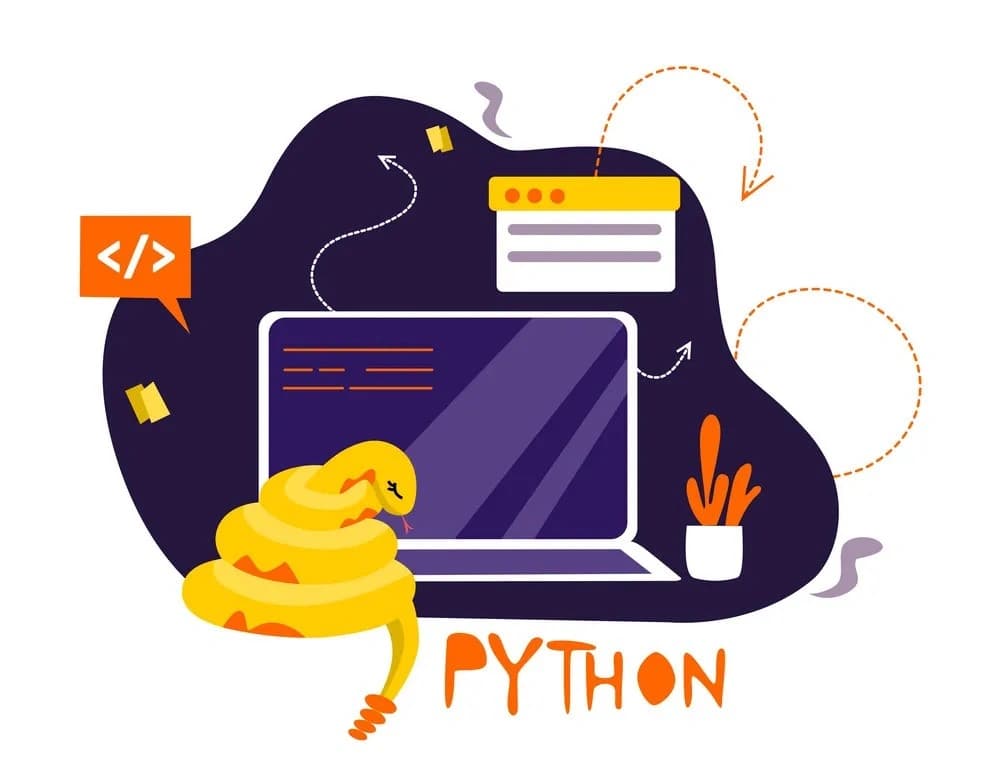
Python's simple syntax and powerful capabilities make it an ideal first text-based programming language for kids and teens aged 8 and above.
When children are ready to move beyond visual coding, Python is the language that almost every expert recommends first. It reads almost like plain English, runs on any computer, and is used by some of the world's most successful companies. For a young programmer, it is the perfect bridge from playground to profession.
Why Python and Not Another Language?
There are hundreds of programming languages. Parents often ask why we recommend Python specifically for young learners. The answer comes down to three things: readability, power, and opportunity.
Readability
Python code looks remarkably close to plain English. Compare Python to Java, for example — Python needs a fraction of the code to do the same thing, and it reads naturally from top to bottom. A child can write a working program in Python on day one.
Power
Despite being beginner-friendly, Python is a fully professional language. Google, Netflix, Instagram, NASA, and thousands of other organisations use Python in production. Children are not learning a toy language — they are learning the real thing.
Opportunity
Python is the number one language in data science, artificial intelligence, and machine learning. Children learning Python today are building skills that are genuinely in demand and will remain so for decades.
What Children Build in Python
The best way to learn Python is to build things. At Coding Buds, our Python course is entirely project-based. Children do not sit through lectures — they build.
- Calculator and number games — variables, operators, and logic
- Quiz apps — conditionals and user input
- Number guessing games — loops and randomisation
- Simple chatbots — string manipulation and functions
- Mini data projects — lists, dictionaries, and file handling
- Basic AI concepts — pattern recognition and simple machine learning ideas
The Confidence Shift Parents Notice
Something interesting happens when a child writes their first Python program that actually runs. It is not just satisfaction — it is a shift in how they see themselves. They are no longer a child who uses technology. They are a child who creates with technology.
Parents frequently tell us their child started approaching school problems differently after a few months of Python. The habit of breaking a problem into steps, testing solutions, and debugging calmly transfers directly into maths, science, and even writing assignments.
One of our parents told us: 'My son used to give up the moment something was hard. After six months of Python, he debugs his homework the way he debugs his code — methodically, without panic.' That is the real value of learning to code.
The Right Age to Start Python
We generally recommend Python from age 8 onwards, though children who have completed a Scratch course are often ready earlier. The key is comfort with reading and basic arithmetic — Python involves both.
There is no upper limit. We teach Python to teenagers preparing for school computer science exams, to students building college application projects, and to children who simply want to see what they can create.
How Our Python Course Works
Our Python course runs across 48 structured sessions. We start with the absolute basics and gradually build to more complex projects. Children are never thrown in the deep end — each concept is introduced when they are genuinely ready for it.
Every student gets personalised attention. In our 1:1 sessions, the pace adapts completely to your child. In our group sessions, we keep groups small enough that nobody gets left behind.
Book a free trial Python class today. Your child will write their first real program in the very first session — we guarantee it.
Ready to get started?
Book a free trial class for your child today.
No commitment required. See how we make coding fun, structured, and genuinely effective for kids aged 6–16.
Book a Free TrialMore Articles
Put Your Webpage on the Internet!
A step-by-step wizard tutorial for kids and teens to convert their Python code into a live webpage using GitHub Pages. No experience needed — just follow the magic!
Read Article
Getting Started with Scratch Programming for Kids
Scratch is the perfect introduction to coding for children. This visual programming language uses colourful blocks instead of complex text — making it ideal for ages 6 to 12.
Read ArticleBuilding Your First Website: A Teen's Guide
Web development opens doors to endless possibilities. Learn how teenagers can create their own websites using HTML, CSS, and JavaScript — and why every parent should consider this course for their child.
Read Article