Education
The Benefits of Learning to Code at an Early Age
Early coding education develops critical thinking, problem-solving abilities, creativity, and logical reasoning. Here is what the research shows — and what parents who have made the decision early have seen in their own children.
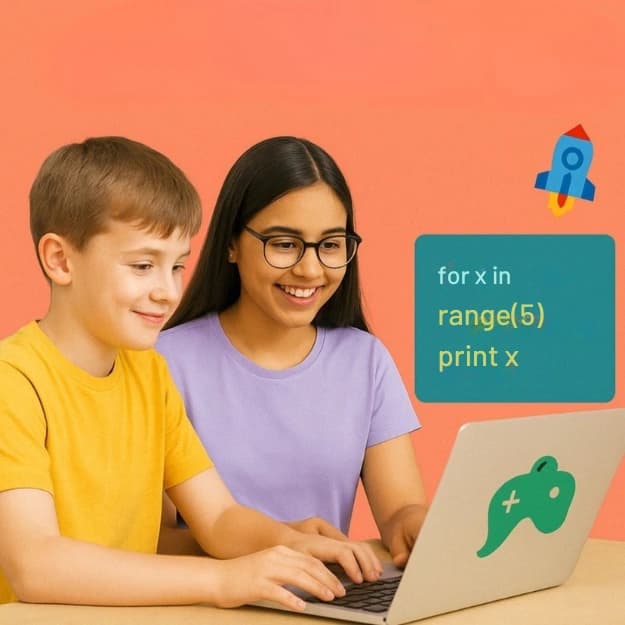
Early coding education develops critical thinking, problem-solving abilities, creativity, and logical reasoning. Here is what the research shows — and what parents who have made the decision early have seen in their own children.
The question is no longer whether children should learn to code. Researchers, educators, and technology leaders increasingly agree that coding is a fundamental literacy for the 21st century — as important as reading and mathematics. The real question is: when is the right time to start?
What Happens in a Child's Brain When They Learn to Code
Coding is not just a technical skill. It is a way of thinking. When children learn to code, they practice breaking large problems into smaller steps (decomposition), identifying patterns, creating generalisable rules (abstraction), and following logical sequences.
These are the same cognitive processes used in mathematics, science, reading comprehension, and even creative writing. Children who develop them early have a genuine advantage across every academic subject.
What Research Shows
- A study published in the Journal of Educational Psychology found that early coding education improves mathematical performance in primary school children
- MIT research shows Scratch learners demonstrate stronger sequential reasoning than non-coders of the same age
- Children who code show higher scores on tests measuring creativity and flexible thinking
- Early coders show greater persistence when faced with difficult tasks — they are used to debugging
- Coding education correlates with improved reading comprehension, as both require following complex logical sequences
The Skills That Transfer Into Real Life
Resilience and Persistence
Every programmer encounters bugs — moments where something does not work. Learning to respond to failure with curiosity rather than frustration is one of the most valuable things coding teaches. Parents regularly tell us this mindset shift is visible in how their children approach homework, sports setbacks, and social challenges.
Creativity and Self-Expression
Coding is fundamentally creative. Children who code do not just consume technology — they create with it. Games, animations, websites, and apps are all forms of self-expression. Many children find coding unlocks a creative outlet they did not know they had.
Logical Communication
Programming requires extreme precision in communication — the computer does exactly what you tell it, nothing more. Children who code develop the habit of thinking carefully before acting and expressing ideas with clarity. Teachers frequently notice this improvement in written work.
A parent told us: 'We started our daughter in Scratch at age 7 just to keep her busy. Two years later, her school teacher told us she is now the most systematic thinker in her class. She approaches every problem by asking: what are the steps? That is pure coding thinking.'
The Competitive Advantage
Beyond academic skills, early coding education gives children a concrete advantage as they get older. University admissions committees, scholarship panels, and employers all value demonstrated technical ability. A child who has been coding for 5 years by the time they apply to university has something most applicants simply do not have.
But this advantage is most powerful when it begins early, when the learning is playful, and when the child genuinely enjoys it. That is exactly what we design every Coding Buds course to deliver.
The Right Time to Start
Most children are ready for structured coding education from age 6. The earlier they begin, the more natural the thinking becomes — just like learning a language. A child who starts coding at 6 will find programming intuitive in a way that someone starting at 16 has to consciously work towards.
Book a free trial class and let us show you what your child can create in the very first session. You might be surprised.
Ready to get started?
Book a free trial class for your child today.
No commitment required. See how we make coding fun, structured, and genuinely effective for kids aged 6–16.
Book a Free TrialMore Articles
Put Your Webpage on the Internet!
A step-by-step wizard tutorial for kids and teens to convert their Python code into a live webpage using GitHub Pages. No experience needed — just follow the magic!
Read Article
Getting Started with Scratch Programming for Kids
Scratch is the perfect introduction to coding for children. This visual programming language uses colourful blocks instead of complex text — making it ideal for ages 6 to 12.
Read Article
Why Python is Perfect for Young Programmers
Python's simple syntax and powerful capabilities make it an ideal first text-based programming language for kids and teens aged 8 and above.
Read Article